What is an EOT Crane?
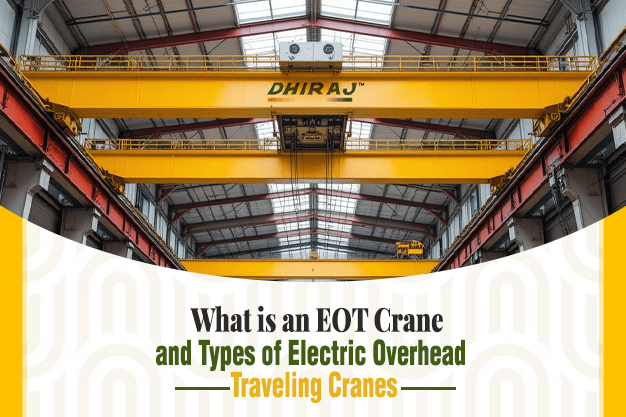
An EOT Crane, or Electric Overhead Traveling Crane, is a type of overhead crane commonly used in industrial environments for lifting and moving heavy loads. It operates on an overhead runway system with electric-powered mechanisms for hoisting and traveling. EOT Cranes are essential in factories, warehouses, steel plants, and workshops where efficient material handling is critical. They are available in single or double girder configurations based on load capacity and application. Known for their durability, precision, and automation capabilities, EOT cranes significantly improve productivity and safety in material movement across large workspaces.
Types of EOT Cranes
Double Girder EOT Crane
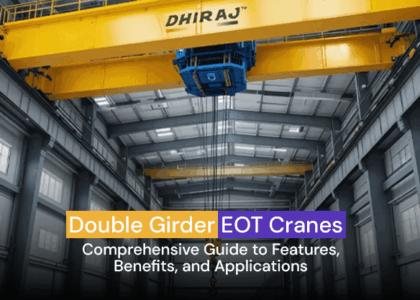
A Double Girder EOT Crane is designed for heavy-duty applications that require lifting large loads over long spans. It features two main bridge girders, allowing for higher hook height, increased strength, and better stability compared to single girder models. These cranes are ideal for intensive operations with frequent lifting cycles.
Capacity: Typically ranges from 5 tons to 250+ tons
Applications: Steel plants, shipyards, foundries, heavy machinery manufacturing, construction sites, and power plants—anywhere high lifting capacity and durability are critical.
Single Girder EOT Crane
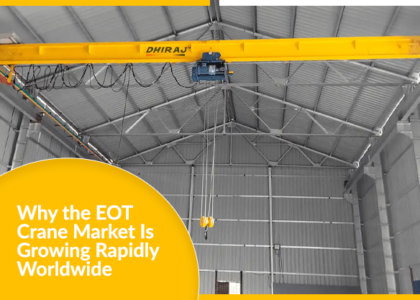
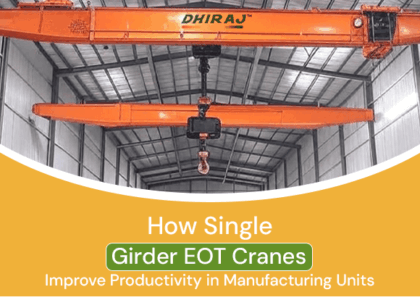
A Single Girder EOT Crane consists of one bridge girder supported by end trucks, with the hoist traveling on the lower flange. It is compact, economical, and easy to maintain—perfect for light to medium-duty material handling. It also requires less headroom and is more energy-efficient.
Capacity: Typically ranges from 0.5 tons to 20 tons
Applications: Machine shops, warehouses, small manufacturing units, and maintenance workshops, where moderate lifting is required and operational space is limited.
Single Girder Underslung EOT Crane
A Single Girder Underslung EOT Crane is suspended from the roof structure, running on the bottom flange of I-beams rather than top-mounted rails. This design is ideal where floor space is limited or where the building structure can’t support top-mounted systems. It offers flexible bay coverage and smooth material movement.
Capacity: Typically ranges from 0.5 tons to 10 tons
Applications: Warehouses, assembly lines, and maintenance areas with low headroom or light structural roofs—especially in sectors like automotive and electronics.
EOT Grab Bucket Crane
An EOT Grab Bucket Crane is specially designed for handling bulk materials such as coal, sand, gravel, and scrap. It features a grab bucket attached to the hoist, which opens and closes hydraulically or mechanically to grab loose materials efficiently. These cranes are highly productive in bulk handling industries.
Capacity: Typically ranges from 5 tons to 50 tons, depending on the material and grab design
Applications: Cement plants, mining sites, waste management facilities, power stations, and ports, where fast and repetitive material grabbing is required.
EOT Crane Price Guide in India
The price of an EOT crane in India varies depending on its type, load capacity, customization, and application. Below is an approximate pricing chart to help you understand the cost range for different types of EOT cranes:
Crane Type | Load Capacity | Approx. Price Range (INR) |
Single Girder EOT Crane | 1–10 tons | ₹5 – ₹15 lakhs |
Double Girder EOT Crane | 5–50 tons | ₹12 – ₹50 lakhs |
Customized Heavy Duty EOT Crane | 50+ tons | ₹50 lakhs and above |
Single Girder Underslung Crane | 0.5–5 tons | ₹4 – ₹10 lakhs |
EOT Grab Bucket Crane | 5–30 tons | ₹18 – ₹60 lakhs |
Key Components of an EOT Crane
An Electric Overhead Traveling (EOT) crane is a sophisticated material handling system made up of several integrated components, each designed to perform a specific function. These parts work together to ensure safe, reliable, and efficient load movement across a facility. Understanding each component helps in better maintenance, selection, and operation of the crane.
1. Bridge Girders
The bridge girder is the main horizontal structure of the EOT Crane. It spans across the crane runway and supports the trolley and hoisting mechanism. Bridge girders can be single or double, depending on the crane design and load capacity.
Function: Carries the trolley and hoist across the span.
Construction: Typically fabricated from steel box girders or rolled sections.
2. End Carriages
End carriages are structures located at both ends of the bridge girder. They house the wheels and enable the entire crane to travel along the length of the runway rails.
Function: Allow horizontal movement of the crane across the runway.
Design: Includes wheel assemblies, motors, and buffers.
3. Hoisting Mechanism
The hoisting mechanism is the core lifting component of the EOT Crane. It includes a hoist (wire rope or chain) and drum system that lifts, lowers, and holds the load securely.
Types: Electric wire rope hoist, electric chain hoist
Features: Load brakes, limit switches, overload protection
4. Crane Trolley
The crane trolley moves along the bridge girder and carries the hoisting mechanism. It can be a fixed or traveling type, depending on the application.
Function: Enables side-to-side movement of the hoist along the girder.
Design: Compact, robust, with gear-driven wheels
5. Runway Rails
Runway rails are installed on the top of gantry structures or building columns. These rails guide the end carriages and enable longitudinal movement of the crane.
Function: Provides a track for the crane’s wheels to travel on.
Installation: Bolted or welded to the gantry girder or support beam
6. Control Systems
Control systems allow the operator to manage crane operations, including movement and load handling. Modern EOT Cranes use various control types.
Types: Pendant control, wireless radio remote, cabin control
Safety: Emergency stop switches, limiters, and programmable logic controllers (PLC)
7. Motors & Gearboxes
Motors and gearboxes power the hoisting, trolley movement, and crane travel. They are engineered for high torque and long duty cycles to handle industrial demands.
Motor Types: Squirrel cage induction motors, slip-ring motors
Features: Thermally protected, brake integrated, low-maintenance
How to Choose the Right EOT Crane
Selecting the right EOT crane is crucial to ensure efficient material handling, safety, and long-term reliability. The wrong choice can lead to performance issues, downtime, or even safety hazards. Here’s a breakdown of the key factors you should consider before purchasing or installing an Electric Overhead Traveling (EOT) crane:
1. Load Capacity
The load capacity refers to the maximum weight the crane needs to lift during operation. Always select a crane with a capacity above your maximum expected load to allow for safe and reliable performance.
Common Capacities: 1 ton to 250+ tons
Tip: Include a safety margin (10–20%) for future upgrades or unexpected loads.
2. Span (Crane Width)
The span is the distance between the two rails on which the crane travels. It’s crucial for ensuring the crane can cover the entire workspace.
Measured: From center-to-center of runway rails
Span Range: Customizable from 5 meters to over 40 meters
3. Height of Lift
This is the vertical distance from the floor to the highest point the crane needs to lift a load. It ensures there is enough clearance to lift and position materials.
Low lift heights suit compact indoor facilities
High lift heights needed in tall warehouses or factories
4. Duty Class / Crane Usage Frequency
The duty class (also known as crane classification) defines how often and intensely the crane will be used. It’s categorized by IS/ISO or FEM standards.
Class | Usage Type | Example |
Class I | Light | Maintenance shops |
Class II | Medium | General manufacturing |
Class III | Heavy | Steel plants, assembly lines |
Class IV | Extra Heavy | Foundries, shipyards |
5. Working Environment
Your crane must be suited to the environment in which it operates. Factors such as temperature, humidity, dust, and corrosive materials can impact crane performance.
Outdoor Use: Needs weatherproofing, wind protection, IP-rated electricals
Dusty/Corrosive Zones: Use anti-corrosion coatings, sealed motors
Hazardous Zones: Must meet explosion-proof and flameproof safety norms
✅ Pro Tip:
Consult an experienced EOT Crane Manufacturer or engineering partner for site assessment and custom configuration based on your specific operational needs.
Common Applications of EOT Cranes
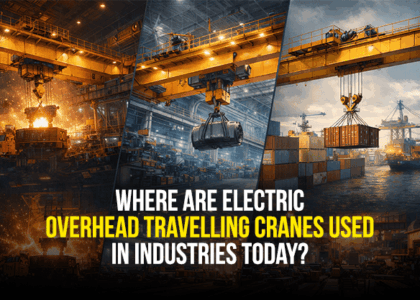
EOT (Electric Overhead Traveling) Cranes are indispensable in industries where heavy or bulky materials need to be lifted, moved, or positioned with precision. Their robust design, versatility, and automation capabilities make them a preferred solution across many industrial sectors.
Below are the most common applications of EOT cranes:
1. Manufacturing Units
EOT Cranes streamline material handling in manufacturing units by lifting raw materials, machine parts, and finished products across production lines.
Used for: Assembly lines, fabrication, and mold shifting
2. Steel & Iron Plants
In steel and iron industries, EOT Cranes handle high-temperature and high-weight materials like billets, coils, and molten metal buckets.
Used for: Hot metal handling, rolling mills, slab lifting
3. Logistics & Warehouses
EOT Cranes enhance productivity in logistics hubs and warehouses by enabling the fast movement of large consignments or goods pallets.
Used for: Pallet lifting, stock arrangement, container movement
4. Power Plants
Power plants require cranes for maintenance of turbines, generators, and heavy electrical equipment during operations and shutdowns.
Used for: Equipment installation, maintenance lifting
5. Cement Industries
EOT Cranes in cement plants handle the transport of heavy equipment and raw materials like limestone, clinker, and finished cement.
Used for: Kiln part handling, equipment maintenance
6. Shipbuilding Yards
Shipyards rely on EOT Cranes to lift massive parts like hulls, engines, and panels during ship assembly and repairs.
Used for: Hull lifting, component installation
7. Foundries and Automotive Plants
In foundries and automotive industries, EOT Cranes assist in casting, die handling, and transporting vehicle parts across production zones.
Used for: Engine block transport, mold changing, chassis lifting
EOT Crane Maintenance Tips
Proper EOT Crane maintenance is essential to ensure reliable performance, operator safety, and prolonged equipment life. Routine inspections and timely servicing help prevent costly breakdowns and production delays. Below are key maintenance practices every facility should follow:
1. Inspect Wire Ropes Regularly
Wire ropes are critical for lifting operations and must be checked frequently for signs of wear, fraying, corrosion, or broken strands.
Tip: Replace ropes showing any deformation or load-bearing issues.
2. Lubricate Moving Parts
All moving parts such as hoists, trolleys, wheels, and gears should be properly lubricated to reduce friction and prevent wear.
Recommended: Use manufacturer-approved lubricants and follow the lubrication schedule.
3. Check for Motor Heating or Unusual Noise
Overheating or strange noises from motors, gearboxes, or brakes could indicate mechanical issues. Regularly monitor operating temperatures and sound patterns.
Action: Shut down and investigate anomalies immediately.
4. Verify Control Systems and Emergency Switches
Inspect pendant controls, remote units, limit switches, and emergency stop buttons for functionality. Faulty controls can cause accidents and operational failures.
Tip: Perform routine function tests on all safety and control systems.
5. Conduct Annual Third-Party Inspections
Certified third-party audits help ensure compliance with industry safety regulations (like IS 3177 or OSHA standards) and identify hidden issues.
Includes: Load testing, structural integrity checks, and certification
Maintenance Reminder: Always maintain a logbook of all inspections, repairs, and part replacements to ensure traceability and regulatory compliance.
Where to Buy the Best Industrial EOT Crane?
When it comes to purchasing a reliable and high-performance industrial EOT Crane, choosing an experienced and trusted manufacturer is key. Dhiraj Crane, established in 1974, is one of India’s leading EOT Crane Manufacturers, known for delivering customized overhead lifting solutions tailored to industrial needs. With over five decades of engineering excellence, Dhiraj Crane specializes in single girder, double girder, gantry, underslung, and grab bucket EOT Cranes, built to meet IS and international standards. Whether you’re setting up a new facility or upgrading an existing one, Dhiraj Crane offers turnkey solutions backed by quality manufacturing, expert installation, and dependable after-sales support.